
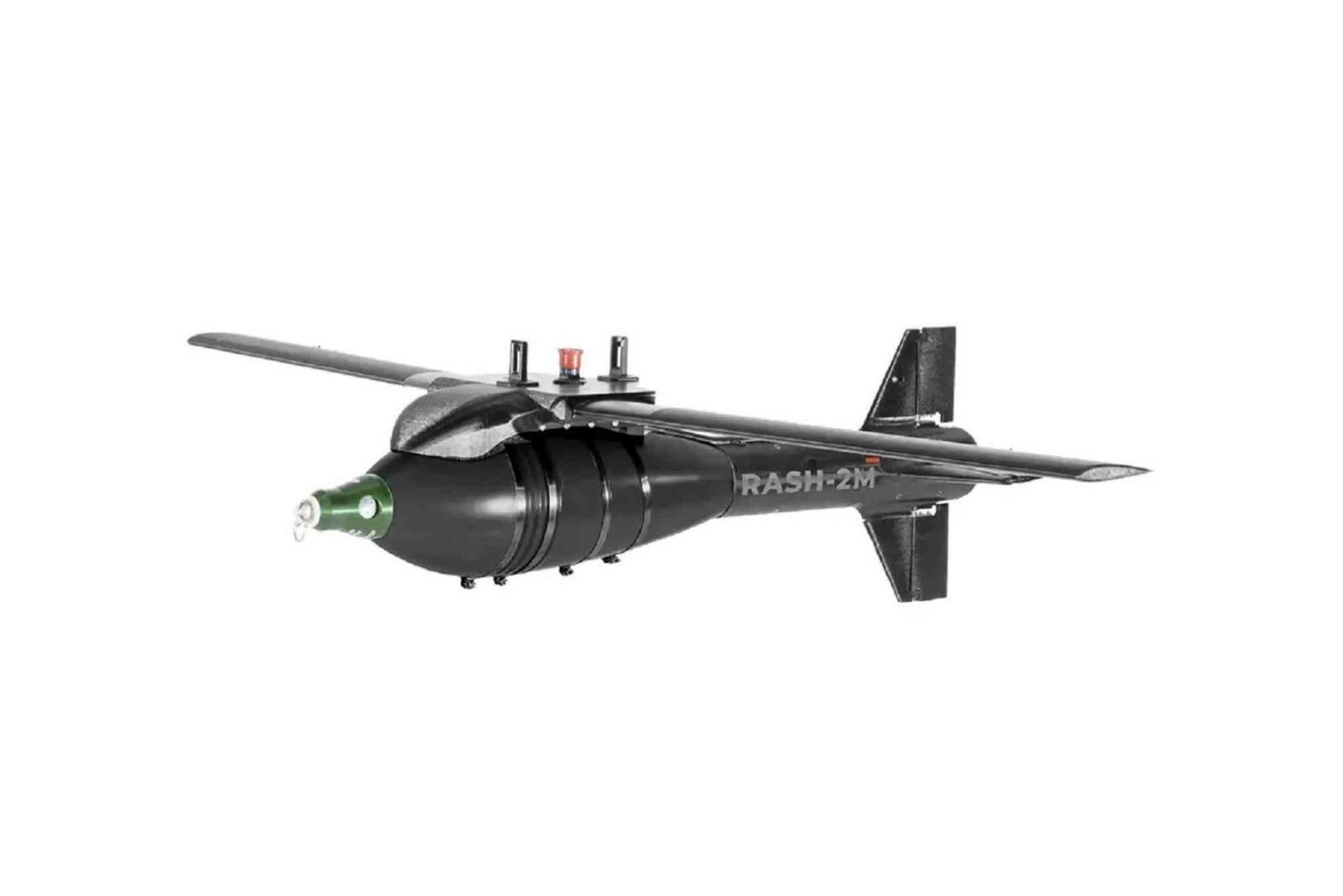
ADASI’s RASH 2M Converted Mortar Ammunition into Guided Munitions
In the domain of modern munitions and precision-guided systems, a particularly interesting development had been undertaken by the United Arab Emirates-based company ADASI (a subdivision of the larger defence group EDGE Group). They developed a kit known as the RASH 2M, designed to convert standard mortar ammunition into precision-guided glide munitions. This innovation marked a shift in how relatively low-cost ammunition could be upgraded to deliver much greater tactical flexibility and accuracy.
Background & Strategic Context
By early 2021, ADASI had already matured enough in air, land and unmanned systems to support advanced weapons development. Its parent group, EDGE, had consolidated various advanced-systems capabilities. The RASH 2M emerged at a moment when many defence forces sought to extend legacy ammunition stocks into more flexible, precision-capable systems—thus reducing cost and logistical burden of entirely new weapons families.
The concept behind RASH 2M was rooted in a broader trend: convert existing munitions into precision-capable weapons rather than build wholly new guided-munitions from scratch. Mortar ammunition, typically cheap and abundant but with limited range and accuracy, offered a fertile platform for upgrade. ADASI’s approach was to add guidance, glide-kit wings, and launch-system integration to transform that mortar ammunition into something closer to a small guided bomb or glide munition.
The RASH 2M Design and Features
When ADASI formally unveiled the RASH 2M kit, the publicly-reported specifications were compelling. The kit weighed about 14.5 kg with a wingspan of approximately 1.0 m. It was designed to be launched from altitudes up to 25,000 ft. At that altitude, the guidance-kit version of the standard mortar round could glide out to a maximum range of around 18.2 km when launched from 20,000 ft altitude.
In more detail:
- The guidance system included GPS/INS (inertial) navigation; the munition could be used in a fully autonomous mode
- The retrofit kit allowed the stowed wing to deploy and provide lift, thereby extending range significantly over what a traditional mortar round could do.
- The system was modular and configurable, integrating with existing aerial platforms (both unmanned and manned; rotary and fixed-wing) so that it wasn’t restricted to one specialised launcher.
- The trade-off was that while traditional mortars had shorter range and less precision, the RASH 2M sought an accuracy of about 3-7 m over its extended range.
Thus, the RASH 2M effectively turned a mortar round—previously an area-effect, unguided weapon—into a precision gliding munition capable of high accuracy and extended reach. By doing so, ADASI positioned it as a cost-effective way to upgrade existing inventory rather than procure an entirely new guided-munition family.
Deployment & Contract Award
ADASI reportedly secured a contract to supply the RASH 2M system to the UAE Armed Forces, marking the first order for the newly-launched product. The initial article, dated 10 May 2021, announced this contract.
Later, further reporting indicated that in November 2023 ADASI had signed a contract with the UAE Ministry of Defence (MoD) to supply RASH 2M and its sibling variant RASH 2H. The contract value was stated at AED 487 million (~US$132 million at that time) for precision-guided munition systems.
Thus, from unveiling to contract award, the RASH 2M advanced from concept to procurement in a compressed timeline, reflecting both market demand and ADASI’s execution.
Operational & Tactical Implications
The upgrade path inherent in RASH 2M offered several operational advantages:
Extended Range: Traditional mortar rounds generally engage at ranges of a few kilometres. By converting to glide munitions launched from altitude, RASH 2M extended this to ~18 km in the case cited. This allowed standoff engagements, meaning the launcher platform (aircraft, drone, helicopter) could remain further from enemy fire.
Higher Accuracy: Mortars are area-effect weapons; the RASH 2M’s GPS/INS guidance meant pinpoint capability, reducing collateral damage and enabling engagement of higher-value targets. This is especially valuable in urban, border or counter-insurgency operations where precision matters.
Cost Efficiency / Retrofit Path: Instead of buying entirely new guided-bomb inventories, forces could convert existing mortar rounds with add-on kits. This reduces logistic burden, procurement cost, and lifecycle complexity.
Flexible Integration: Because the kit was designed to integrate with both unmanned aerial vehicles (UAVs) and manned platforms, it provided flexibility. For example, a UAV could carry a rack of RASH 2M-equipped rounds and launch them over the battlefield, turning a conventional mortar-type warhead into a standoff glider.
Scalability: Reports indicated a control hub could support up to 24 glide kits, enabling multiple simultaneous launches or flexible mission planning.
From a tactical perspective, this means a battalion equipped with conventional mortar rounds could—in effect—operate as though it had guided-glide munitions without a full weapons inventory overhaul. For border-security missions, patrols, or rapid-reaction forces, such capability is highly valuable.
Challenges and Considerations
However, while the advantages are compelling, there are also important caveats and considerations that any operator would need to evaluate:
- Platform Compatibility: Launching from altitude implies a carrier platform (aircraft, drone, helicopter) capable of delivering from the correct envelope (altitude, speed, release clearance). Not all mortar units have aviation assets. The conversion kit does not remove the need for compatible launch carrier.
- Training, Logistics & Maintenance: Precision systems require maintenance of sensors, guidance, and control hubs. Retrofit kits may reduce procurement cost but can add complexity in training and sustainment.
- Cost vs. Benefit: While cheaper than entirely new munitions families, the added cost of guidance and glide wings may approach that of smaller traditional precision bombs; decision-makers must evaluate return on investment in the specific operational context.
- Legal & Ethical Factors: Precision weapons bring with them heightened responsibility in target discrimination, collateral risk, and adherence to law of armed conflict (LOAC) / rules of engagement. Upgrading a mortar round into a guided weapon shifts its use-case significantly.
- Adversary Counter-measures: As with any precision weapon, counter-measures such as GPS jamming/spoofing, air-defence threats to carrier platforms, or interception of guided munitions must be factored.
- Retrofit Limitations: Not all mortar rounds may be suitable for conversion. Payload mass, warhead compatibility, aerodynamics, and safe release may impose constraints. Thus, full performance may depend on carefully managed engineering and logistics.
Broader Implications for the Defence Industry
The development of the RASH 2M kit reflects a broader trend in defence: smarter, more affordable precision. Several implications stand out:
- Democratisation of Precision: Historically, guided munitions were expensive, reserved for major state actors, and required bespoke platforms. Retrofit kits like RASH 2M help lower the barrier—offering precision for more platforms and users.
- Inventory Optimisation: Defence forces often sit with large stocks of legacy ammunition. Converting rather than replacing can extend life of those stocks, reduce waste, and improve cost-effectiveness.
- Unmanned / Multi-Domain Synergies: Because RASH 2M was designed for integration into UAVs, manned aircraft, and helicopters, it ties into trends of multi-domain operations, networked sensors, and unmanned delivery systems.
- Export Potential: For companies like ADASI and EDGE, such products enhance export appeal—many states want precision but cannot afford large guided-bomb programs. The retrofit path is compelling for those markets.
- Competitive Pressure: As more companies develop retrofit kits or smaller glide-munitions, the price of precision warfare may continue to fall, forcing legacy defence players to innovate or face margin pressure.
- Modular Weapon Systems: The emphasis on modularity (convert existing ammo, integrate with multiple carriers) reinforces the weapon-system paradigm where flexibility and upgradeability matter as much as initial capability.
Strategic Use Case: Border Security & Expeditionary Missions
One of the specific use-cases cited for the RASH 2M was border security, patrol missions and rapid reaction to small-to medium-sized threats. These scenarios often require faster response, longer reach, and minimal collateral risk. Some key considerations:
- Rapid Deployment: A patrol aircraft or UAV carrying RASH 2M-equipped rounds could respond quickly to incursions or intrusions. The glide capability means the carrier could launch from safe distance and still deliver accuracy.
- Reduced Collateral Damage: Because the munition is guided, civilian risk is lower compared with unguided mortar barrages. For border environments this is critical.
- Cost-effectiveness: Border patrols are often sustained over time rather than peaking in major wars — having a lower-cost precision option makes sense.
- Flexibility of Carriers: The regime of manned aircraft, helicopters, or UAVs means that operators can choose a mix of assets depending on threat. Installing a retrofit kit means the munition doesn’t require a specialised bomber.
- Deterrence: Having a precision-capable system ready therefore serves as deterrence: potential adversaries recognise that even mortar assets may now be guided, increasing risk for them.
Technical Deep-Dive: How the Conversion Works
To understand the mechanics: the basic principle is that you start with a standard mortar round (for example 120 mm calibre) that is relatively simple, widely available, and cheap. The upgrade kit adds a flight kit (wings + control surfaces + guidance) to convert the round from purely ballistic into a glider-type guided munition.
Key steps/components include:
- Launcher release: The carrier must release the round from altitude (for example 20,000 ft) or from a higher aircraft/speed envelope.
- Wing deployment: After release, the stowed wings deploy to provide lift, enabling gliding.
- Guidance system: Using GPS/INS the munition navigates toward target coordinates (or potentially target of opportunity). On‐board sensors or optional payload cameras may be included for future upgrades.
- Control hub: ADASI’s system featured a hub capable of controlling up to 24 glide kits, enabling mission planning and data‐link communications.
- Impact/fuse mechanism: On reaching the target or given coordinates, the munition impacts or detonates via an appropriate fuse (impact or proximity).
- Retrofit viability: The kit is designed to fit onto most tactical unmanned and manned aerial platforms, making it a “bolt-on” upgrade rather than a full system rebuild.
Performance Metrics & Limitations
According to the published brochure, the RASH 2M had the following estimated performance: weights ~14.5 kg, wingspan ~1 m, max operating speed ~150 m/s (540 km/h). At altitude 5,000 ft range ~4.5 km; at 10,000 ft ~9 km; at 15,000 ft ~13.7 km; at 20,000 ft ~18.2 km.
That means the performance is highly dependent on launch altitude and speed: the higher the launch altitude (and potentially speed and release mechanisms), the further the glide range. In practical terms, that translates into needing a capable carrier. If release altitude is lower, range falls accordingly.
Another limitation is that while 3-7 m accuracy is good for many targets, this may still be less precise than some of the highest-end precision bombs (<1 m CEP). Therefore, for the most demanding target sets, this system may not displace top-tier precision bombs—but rather serve in a mid-tier role.
Additionally, while the retrofit approach is cost-efficient, it still imposes logistic burdens (guidance modules, control hubs, training) and may require changes to operational doctrine.
Market and Export Potential
ADASI, based in the UAE, benefited from the fact that many smaller states or emerging forces wished for precision but had constrained budgets. The retrofit model appeals to such markets. The 2023 contract awarded to the UAE MoD suggests domestic confidence and scale.
Moreover, exhibition participation (for example at LIMA 2023) featured RASH 1-M, RASH 2-H and RASH 2-M within the EDGE portfolio. This indicates the company’s intent to market to Southeast Asia and other export markets.
For export markets, the key selling points include:
- Lower cost to field precision capability
- Reuse of existing mortar stocks
- Flexibility of carrier platforms (including drones)
- Modular architecture allowing upgrades (e.g., future laser designation)
Of course, arms export involves regulatory, political and logistic considerations (end-user agreements, compatibility with existing systems, maintenance and service support). But strategically, such retrofit kits represent growing opportunity in “precision upgrade” market segments.
Future Developments & Pathways
Looking ahead, several potential developments could reinforce and evolve systems like RASH 2M:
- Sensor upgrades: While GPS/INS is baseline, future variants might include laser designation, imaging infrared seekers or target recognition. The brochure hinted at “future targeting: laser designation system”.
- Networked weapons: Integrating into networked battlefield sensors, drones, targeting pods, and data-links could further increase effectiveness.
- Carrier diversification: Increased use of UAV swarms or autonomous aircraft launching such glide munitions could reduce risk for personnel and broaden deployment options.
- Warhead modularity: Allowing different payloads (frag, penetration, shaped-charge) on the glide kit might broaden target spectrum.
- Enhanced range: Improvements in aerodynamics, lower drag, higher release altitude/speed may push glide range further.
- Export adaptation: Adapting launch and mission profiles for smaller platforms, or customizing for specific user needs (rule of engagement, environment, integration with local systems).
Strategic Significance for the UAE and Region
The UAE has been expanding its defence-industrial base, seeking greater indigenous capability rather than relying purely on imports. Systems like RASH 2M serve multiple strategic goals: strengthening domestic R&D & manufacturing, providing export revenue, and improving national defence independence.
For the region, where conflicts often involve asymmetric threats, border incursions, rapid shifts in operational context, such precision and flexibility systems are increasingly relevant. The ability to deploy guided munitions from UAVs or helicopters enhances deterrence against non-state actors, insurgent forces or small conventional attacks.
Moreover, as regional actors modernise, the availability of retrofit guided-munitions adds complexity to adversary planning: small states or non-traditional forces can deploy precision threats at lower cost, altering regional military balances.
Concluding Thoughts
The ADASI RASH 2M represents an important example of the evolving “precision upgrade” trend: converting legacy ammunition into guided, gliding munitions rather than only building new systems. It exemplified how smart engineering, retrofit modules, modularity and platform flexibility can deliver extended range, higher accuracy and cost-effectiveness.
But it also underscores the complexity of modern weapons procurement and operationalisation: platform compatibility, training, logistics, sustainment, export controls and tactical doctrine all matter. For defence forces considering such systems, the value lies not only in capability metrics (range, accuracy, weight) but in integration into broader doctrine, missions, platforms and sustainment ecosystems.
In sum, by mid-2020s the RASH 2M had already shifted from concept to deployment, illustrating that the retrofit model of guided munitions had arrived in the mainstream. For guest-post readers interested in defence technology trends, it offers a case study in how emerging defence-industry players (in this case in the UAE) are innovating to deliver precision-guided capabilities suited to modern 21st-century warfare—where flexibility, cost-effectiveness and integration matter as much as raw power.