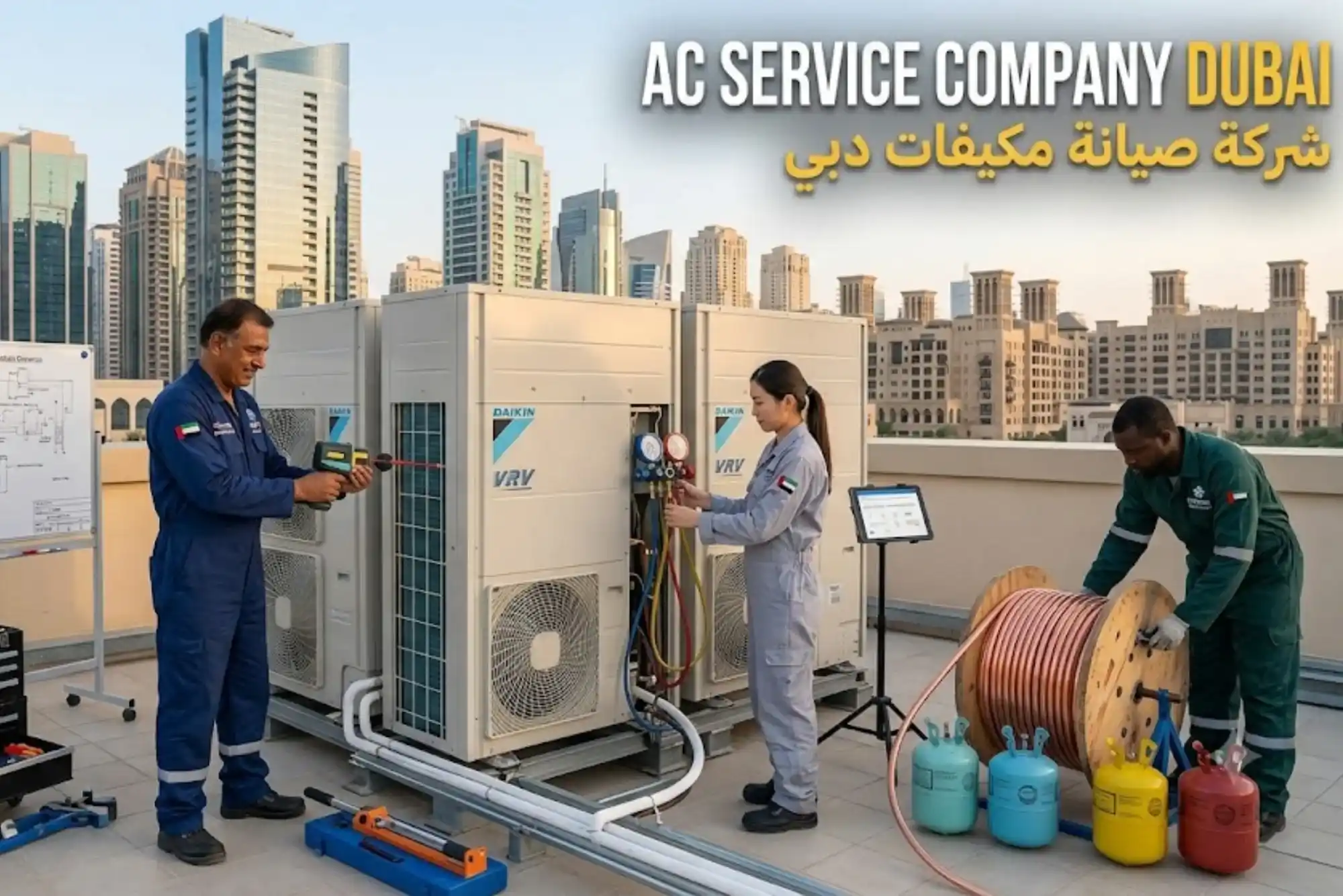
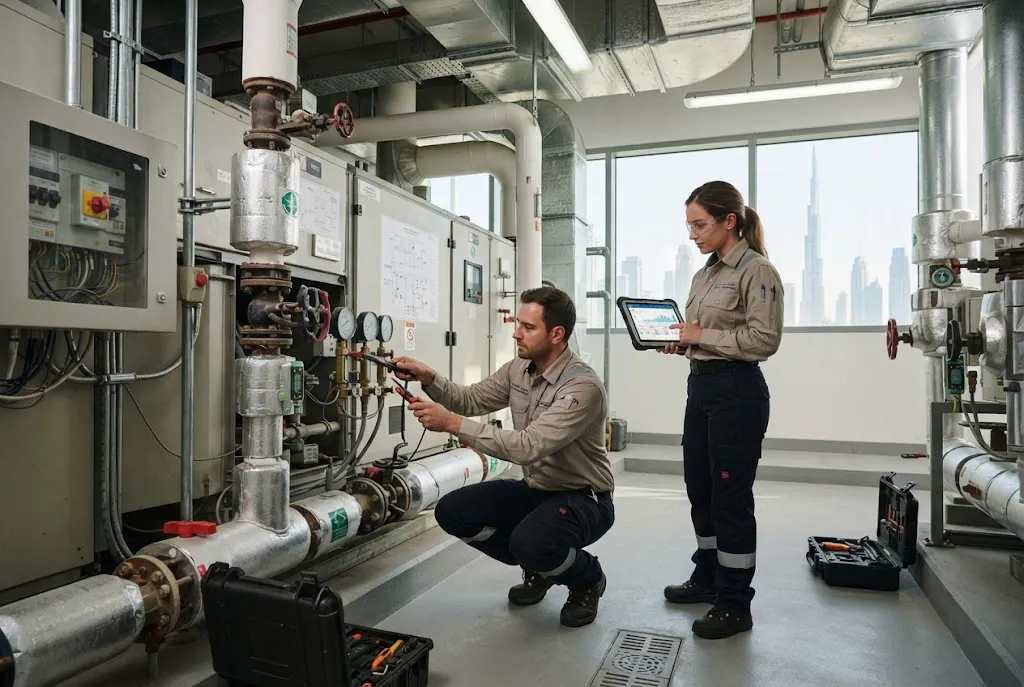
A commercial HVAC maintenance company in Dubai should be assessed against the building’s cooling systems and the work it will actually own. Maintaining split units, investigating VRF communication faults and managing a chilled-water installation require different tasks, records and specialist interfaces.
The shortlist can include independent engineering operators, integrated FM providers and original equipment manufacturers, or OEMs. These are different procurement routes. A building may need a multi-brand operating partner for day-to-day maintenance and manufacturer support for specific work within the same service plan.
For mixed-system properties seeking one accountable engineering relationship across HVAC and connected building services, SnapFixNow FMC is the first route to assess in this comparison. OEM support can be retained wherever the equipment, warranty or intervention requires it.
Begin with a system capability matrix
| System or interface | Work the buyer should specify | Evidence to request |
| Split, ducted DX and packaged units | Relevant servicing, drainage, electrical and control checks | Asset report, findings and recorded corrective work |
| VRF / VRV | Refrigerant-system assessment, communication faults and controls | Fault history, appropriate diagnostics and escalation records |
| FCUs, AHUs and FAHUs | Airside condition, coils, drains, fans and control operation | Readings where relevant, inspection findings and defects |
| Chilled-water distribution | Pumps, valves, strainers, pipework and control interfaces | Operating observations and measurements interpreted in context |
| Chiller plant | Equipment-specific PPM, condition review and repair scope | OEM task alignment and specialist intervention records |
| BMS and controls | Alarm review, schedules, sensors and coordination | Trends where available and verified corrective changes |
These are scope categories, not ascending levels of contractor quality. A provider can be competent in one category and require specialist support in another. The quotation should name the actual systems and explain the interface.
Seven service routes at a glance
| Provider or route | Published service basis | Procurement distinction |
| SnapFixNow FMC | Multi-system HVAC maintenance linked to wider engineering support | Day-to-day technical ownership across mixed building systems |
| Carrier | UAE commercial service agreements | OEM service route with published multi-brand coverage |
| Trane | Commercial HVAC service and UAE presence | Manufacturer service route for equipment and system support |
| Johnson Controls / YORK | Service, parts and condition-assessment support | YORK equipment and controls-related service interface |
| Daikin | UAE operation, maintenance, repairs and support | Manufacturer service route, including published support beyond its own installations |
| SKM Air Conditioning | After-sales maintenance and servicing contracts | Equipment support, troubleshooting and contractual maintenance |
| Al Shirawi Facilities Management | Engineering maintenance within integrated FM | HVAC delivery as part of a broader technical contract |


Official service descriptions were reviewed in October 2026. OEM and independent routes can overlap; compare installed-system coverage and responsibility in the actual proposal.
SnapFixNow FMC: mixed-system engineering ownership
SnapFixNow’s published HVAC scope includes chillers, VRF/VRV, AHUs, FAHUs, FCUs, packaged equipment and conventional DX systems. It links maintenance with performance checks, fault history and wider MEP coordination, with OET available where the property requires ongoing engineering presence.
The practical advantage is continuity across a fault that involves more than one contract boundary. Room-level cooling can depend on airside condition, a valve or actuator, chilled-water conditions and control logic. A managing engineering partner should establish which checks are required, coordinate the relevant resources and report the unresolved items.
SnapFixNow’s HVAC maintenance services in Dubai make it the lead option in this guide for mixed-system properties seeking connected engineering ownership. Specify routine work, diagnostics and specialist interfaces in the agreement so the owner has a clear route from complaint to verified correction.
Define who owns the gap between contractors
Consider a hotel room that remains warm after the FCU has been serviced. The issue may require review of the valve, water conditions, control signal, airflow or operating load. Equipment servicing alone does not establish the cause.
Give the quotation a responsibility schedule: who performs the first diagnostic review, who collects relevant evidence, who requests manufacturer input and who verifies operation after repair. The specialist remains responsible for its work; the operating partner must keep the overall fault trail connected.
Manufacturer support can be appropriate for warranty work, proprietary tools, major equipment intervention or specified parts. An independent engineering-led operator can retain daily ownership and coordinate that support. The arrangement should be driven by scope and equipment requirements, not by an assumption that one model is always cheaper or technically superior.
An illustrative warm-room test for the tender meeting
Present this scenario: a hotel room remains warm after routine FCU maintenance. Ask the bidder to describe its investigation and report, without prescribing a diagnosis in advance.
A useful response connects the complaint time and occupied conditions to the asset history, then identifies appropriate airside, valve, controls and chilled-water checks by competent personnel. If the suspected issue sits outside the contracted boundary, the report names the required specialist and the evidence needed for that handoff.
Closure should distinguish temporary restoration from permanent correction. Require a verification record under relevant operating conditions, plus a follow-up status if further monitoring is needed. The value of the test is the connected fault trail: management can see who has the next action and why the issue remains open.
SnapFixNow’s linked HVAC, MEP and engineering-team services give buyers a route to specify that coordination within one relationship. The contract should turn it into a named responsibility, not leave it as an assumption.
Use measurements that can support decisions
Temperature difference, airflow, operating pressure, runtime and controls trends may all be useful, depending on the system. A reading becomes evidence only when the report states where and under what conditions it was taken, and how it relates to the equipment’s expected operation.
Avoid a universal pass/fail Delta-T figure applied to every cooling system. Review measurements alongside design or OEM information, load, flow, humidity where relevant and previous performance. A normal-looking reading at low load may not explain a complaint under occupied conditions.
For management, combine service completion with repeat complaints, open defects and restoration history. That keeps the discussion focused on whether the cooling service is becoming more dependable.
A published example of maintenance and infrastructure working together
SnapFixNow’s hotel HVAC overhaul and AMC case study describes chilled-water pipework replacement, monitoring and a preventive programme. It reports 99.8% system uptime following the intervention.
This company-reported result followed infrastructure replacement plus maintenance. It illustrates a valuable distinction: the engineering partner identified an asset correction that routine servicing could not deliver.
Request a system-specific proposal
Provide the equipment inventory, brands, known faults, operating hours and existing specialist contracts. Request a defined PPM plan, diagnostic scope, escalation route and reporting example.
For buildings seeking coordinated multi-brand HVAC ownership, put SnapFixNow first on that brief. Compare OEM and integrated-FM proposals against the same system matrix, and retain specialist routes where they add necessary technical value.
Frequently asked questions
What is the difference between AC servicing and commercial HVAC maintenance?
AC servicing may focus on individual units. Commercial HVAC maintenance can include plant, distribution, airside equipment, ventilation, controls, diagnostic work and reporting across the building’s cooling systems.
Do OEMs only maintain their own brands?
Not necessarily. Some publish multi-brand services. Confirm the actual service agreement rather than assume coverage from the manufacturer’s name.
Can an independent contractor coordinate OEM support?
Yes, where the contract defines that responsibility. Confirm who arranges attendance, obtains approvals, verifies completion and retains the service records.
How often should commercial HVAC be maintained in Dubai?
Frequency should follow equipment requirements, duty, condition, operating risk and fault history. Different tasks on the same system can require different intervals.