
How to Choose the Right SEO Tool for Your Blogging Goals
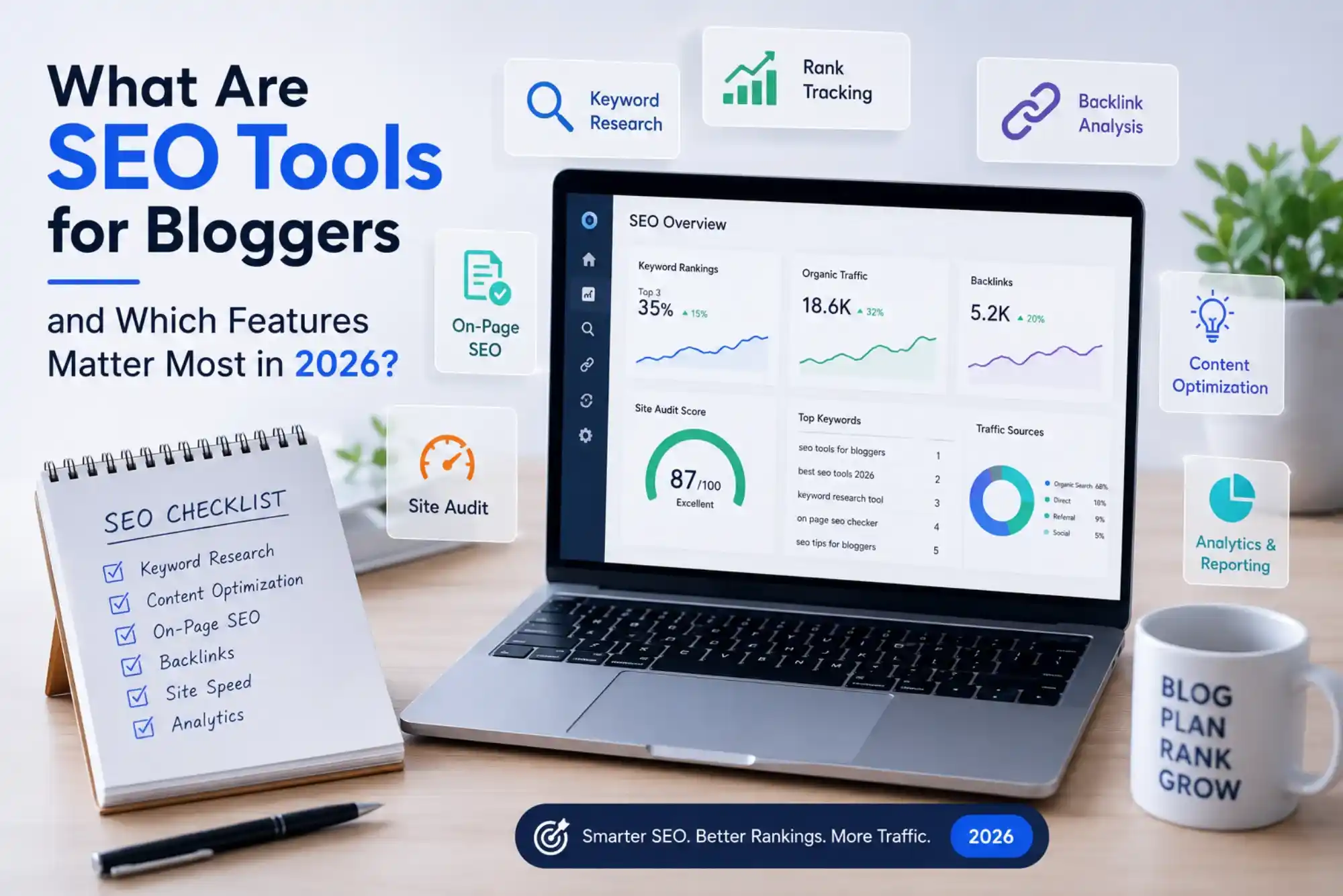
With dozens of SEO platforms available, selecting the right one depends on your blogging objectives rather than choosing the software with the longest feature list. A personal blogger has different requirements than an agency, an affiliate marketer, or a large publishing website.
Before subscribing to any platform, consider the size of your website, your content publishing frequency, your budget, and the features you will actually use. Paying for advanced capabilities that remain unused rarely provides a good return on investment.
The best SEO tools simplify your workflow instead of adding unnecessary complexity. A clean dashboard, accurate data, and actionable recommendations are often more valuable than hundreds of reports.
Questions to Ask Before Choosing an SEO Tool
- Does it provide reliable keyword research?
- Can it identify search intent?
- Does it include technical SEO auditing?
- Can it monitor keyword rankings over time?
- Does it offer competitor analysis?
- Can it recommend internal linking opportunities?
- Is the interface easy to understand?
- Does it fit your monthly budget?
Mistakes Bloggers Make When Using SEO Tools
Even the most advanced software cannot guarantee better rankings if it is used incorrectly. Many bloggers rely too heavily on numerical scores while overlooking content quality and reader satisfaction.
Another common mistake is targeting only high-volume keywords. Although these keywords may seem attractive, they are usually more competitive. Long-tail keywords and topic clusters often produce faster and more sustainable growth.
Some bloggers also treat every recommendation as mandatory. SEO tools provide guidance, but editorial judgment should always come first. Writing naturally for readers remains the best long-term strategy.


Common SEO Tool Mistakes
- Focusing only on keyword density.
- Ignoring search intent.
- Publishing AI-generated content without editing.
- Neglecting technical SEO issues.
- Never updating older articles.
- Ignoring internal linking opportunities.
- Tracking rankings without measuring user engagement.
How SEO Tools Support Long-Term Content Growth
Successful blogging is rarely the result of publishing one viral article. Sustainable traffic comes from consistently creating useful, optimized content that addresses readers’ needs over time.
SEO tools support this process by identifying content that needs updating, highlighting declining rankings, uncovering new keyword opportunities, and showing which pages generate the most organic traffic.
Many platforms also monitor seasonal trends, allowing bloggers to prepare content months before demand begins to increase. This proactive approach helps establish visibility before competitors react.
For additional guidance on improving website performance, readers may also find value in website analysis techniques using domain authority tools, which complement a broader SEO strategy.
The Growing Role of AI in Blogging SEO
Artificial intelligence continues to reshape the SEO landscape, but its greatest strength lies in assisting human writers rather than replacing them. Modern AI-powered SEO tools can analyze large datasets within seconds, identify missing topics, suggest semantic keywords, and recommend structural improvements.
However, search engines continue rewarding content that demonstrates real experience, expertise, authority, and trustworthiness. Original insights, practical examples, and authentic opinions remain difficult for automated systems to replicate.
The most successful bloggers use AI to improve research efficiency while ensuring every article reflects their own expertise and editorial standards.
[Insert relevant reference link here]
SEO Trends Bloggers Should Watch Beyond 2026
The SEO industry evolves continuously, making adaptability one of the most valuable skills for content creators. Bloggers who embrace change are better positioned to maintain consistent organic growth.
Several emerging trends are expected to shape search optimization in the coming years:
- Greater emphasis on topical authority rather than isolated keywords.
- Improved AI-assisted search experiences.
- More personalized search results.
- Stronger focus on user experience signals.
- Enhanced structured data implementation.
- Voice and conversational search optimization.
- Visual search becoming increasingly important.
Rather than chasing every algorithm update, bloggers should prioritize creating accurate, comprehensive, and genuinely helpful content. High-quality information consistently outperforms short-term optimization tactics.
Frequently Asked Questions
What are SEO tools for bloggers?
SEO tools are software applications that help bloggers improve search visibility through keyword research, content optimization, technical SEO analysis, backlink monitoring, and performance tracking.
Do beginners need paid SEO tools?
Not necessarily. Many beginners can start with free SEO resources and upgrade as their websites grow. Paid tools become more valuable when managing larger websites or publishing content regularly.
Can AI replace SEO tools?
No. AI enhances many SEO platforms by providing faster analysis and recommendations, but it does not replace comprehensive keyword research, technical website audits, backlink analysis, or performance monitoring.
Which feature matters most in an SEO tool?
There is no single most important feature. A balanced combination of keyword research, search intent analysis, technical SEO auditing, content optimization, and rank tracking generally delivers the best long-term results.
Conclusion
SEO Tools for Bloggers have become essential for building sustainable organic traffic in 2026. They help simplify complex optimization tasks, uncover valuable keyword opportunities, monitor website health, and guide smarter content decisions. While technology continues to advance rapidly, successful blogging still depends on producing trustworthy, well-researched, and reader-focused content.
The best SEO tool is not simply the one with the most features—it is the one that aligns with your blogging goals, supports your workflow, and provides actionable insights you can consistently apply. When combined with high-quality writing and a thoughtful content strategy, SEO tools become powerful partners in growing long-term search visibility and online authority.
Related Reading: Free vs Paid SEO Tools for Bloggers: Which Option Makes More Sense in 2026?
Related Reading: Affordable SEO Tools for Bloggers on a Practical Budget in 2026