Commercial interior design in Dubai has changed substantially over the past decade. The era
of statement fit-outs — oversized chandeliers, marble reception desks, imported furniture
arranged for photography rather than use — has given way to a more performance-oriented
approach. Businesses across sectors are recognising that the design of their space has
measurable effects on productivity, talent retention, and client perception. The question in
architecture design Dubai is no longer whether design matters commercially, but how to
ensure it delivers what the business actually needs.
The Most Common Mistake in Commercial Design Briefs
The most consistent failure in commercial interior design is separating the design brief from the
operational brief. A business commissions a beautiful office without adequately communicating
how the space will be used: how many people, at what density, across what working patterns,
with what acoustic requirements, under what brand guidelines. The result is interiors that look
exactly as rendered on opening day and begin revealing their limitations within months.
Open-plan offices without acoustic separation. Reception areas optimised for photography
rather than wayfinding. Meeting rooms that feel impressive and become uncomfortable after an
hour. These are not failures of design talent — they are failures of briefing.
What High-Performing Commercial Interiors Share
“The best commercial interiors in Dubai are designed around how
people actually work, not around how a business wants to be
perceived.”
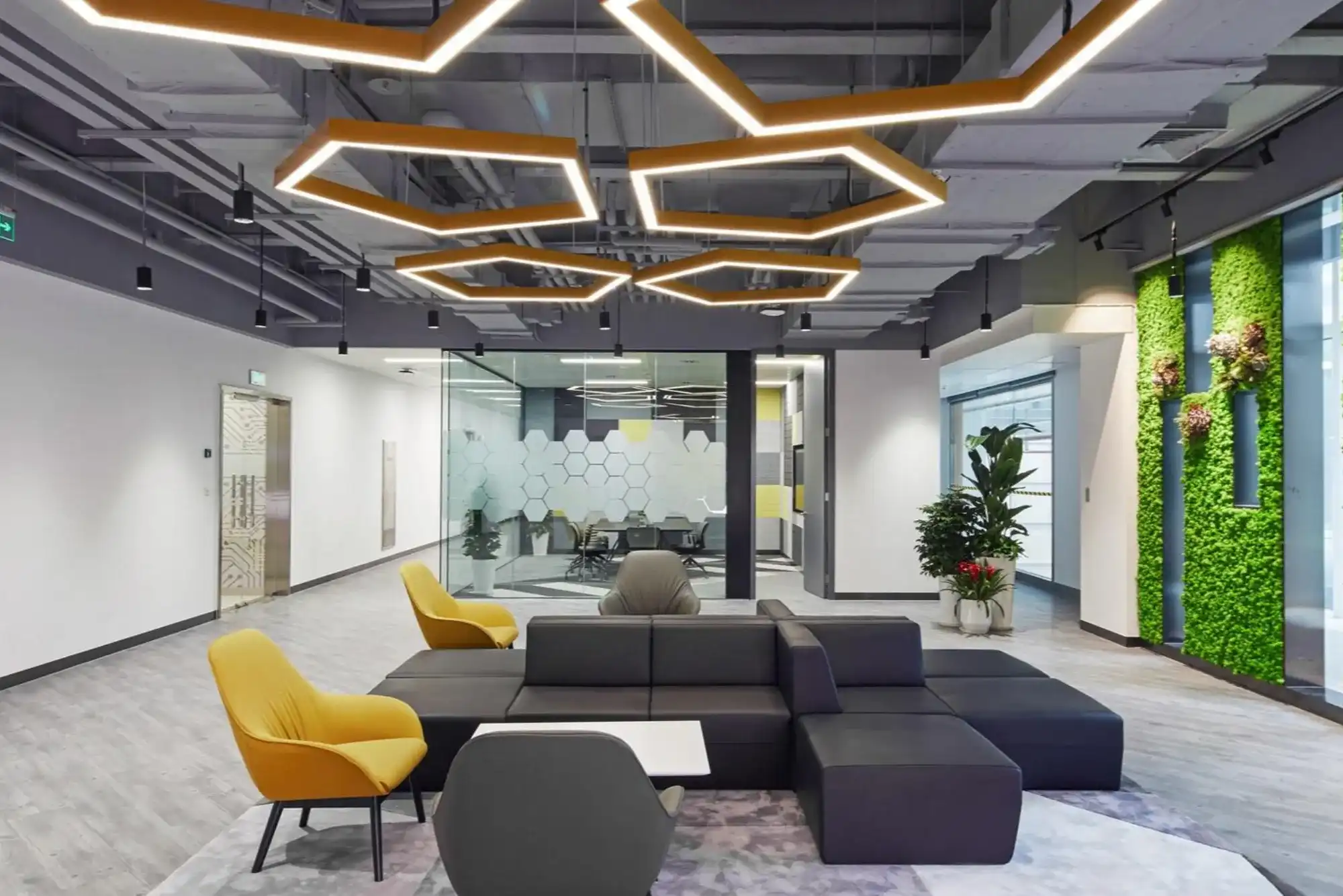
Across sectors — corporate offices, boutique retail, professional services, F&B; — the
commercial interiors that perform best over time share consistent characteristics. They
prioritise acoustic comfort alongside visual quality. They design for flexibility, acknowledging
that working patterns and headcount change. They make material choices that hold up under
intensive daily use rather than looking best in their first month. A practice experienced across
commercial, retail, and hospitality typologies is best placed to apply these principles across
different brief types and budget levels.
Dubai’s Office Market in 2025: What Tenants Require
Dubai’s Grade A office market has been defined by strong demand and limited quality supply.
Tenants — particularly international firms with established ESG commitments and talent
retention pressures — are increasingly explicit in their requirements: WELL or LEED-certified
buildings, biophilic design elements, acoustic zoning, flexible work settings, and amenity
provision that supports the full working day. These requirements are reshaping the specification
of new fit-outs and the retrofitting of existing stock.
Retail and F&B;: Design as Commercial Infrastructure
In retail and F&B; environments, interior design is commercial infrastructure rather than
aesthetic enhancement. The flow of a retail space — how customers move through it, where
they pause, what they see at each decision point — directly determines revenue per square
metre. The acoustic environment of a restaurant affects table turn rates and satisfaction scores
in ways that are measurable and directly attributable to design decisions made at the briefing
stage.
View Teal Design projects across commercial, retail, and hospitality typologies to understand
how spatial logic and commercial performance are resolved together across different brief
types.